
During a three-month stretch of 1991, rock music changed forever with the release of three titanic albums from Seattle-based bands: Pearl Jam’s “Ten,” Nirvana’s “Nevermind” and Soundgarden’s “Superunknown.”
Less than three years later, the first pillar of the genre fell, when Nirvana’s Kurt Cobain, who struggled with drug addiction, died, joining the “27 Club” of popular, influential musicians who passed at the same age. Meanwhile, bands like Alice In Chains and Screaming Trees were about to become casualties of substance abuse.
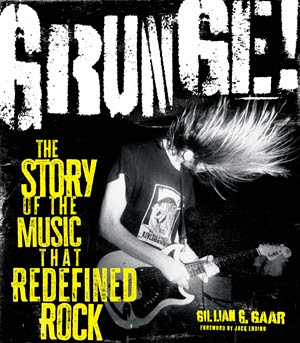
In retrospect, the hard drug epidemic in the Seattle rock scene seems like it would have been an obvious dark cloud to those who were on the inside, but as author Gillian Gaar, whose “Grunge: The Story Of The Music That Redefined Rock,” is published today, it wasn’t so clear-cut.
“I think it kind of depended where you were in the scene,” says Gaar, who as a writer for the Seattle music magazine The Rocket had access to the musicians, managers, promoters and record labels that put grunge on the map. “Photographers who are hanging out with the bands say they were a lot more aware of it, aware that the bands were using, whereas I myself wasn’t that much, and I think perhaps kind of naive to a bit. But this one I remember, this surprised me to read it in one of the memoirs about Mudhoney, where Steve Turner said that for a while he didn’t know Mark Arm was using heroin. And that’s a guy in your own band, right? And his quote was something like, ‘I’m a beer drinker. I just thought he was sleepy all the time.'”
Gaar, who went on to contribute to Rolling Stone, Mojo and Goldmine and has written more than 20 books about rock music, was in the bars and clubs when bands like Green River and Mother Love Bone were building the foundation of what would become grunge and record labels like Sub Pop and C/Z were barely more than hobbyist ventures. She was there when the major labels and the national media turned Cobain and Eddie Vedder into pop culture icons. She was there when the scene was shocked and sorrowed by the rape and murder of The Gits singer Mia Zapata in 1993, and she rushed to Cobain’s home to cover his death on April 5, 1994.
The author chatted with me about some of the moments that made the Seattle scene that is revered 30-plus years later and how she covered them.
Were there any occurrences that signaled to you that the Seattle scene was about to become much bigger than a regional phenomenon?
No, I never had a moment like that. Of course, you couldn’t imagine that kind of bigness. I think the thing was, Soundgarden was the first to sign to a major label, and then I think Alice in Chains was the next and Screaming Trees. So these bands were with major labels and they put out albums like Soundgarden’s first, “Louder Than Love,” the first major label album, and that didn’t explode, so you didn’t necessarily think the next ones would. But for me, big success would be to get to the level of Sonic Youth. I thought that was the dream, that was the goal. I thought that would be great. You know, you’re on a major label, they’ll put out your records, you tour and can play a place like the Paramount Theater, not a club like The Central, and you don’t need day jobs. That that seemed to be the whole package to me.
What bands did you think might make it on a more mainstream level but never did?
It kind of happened on both sides. I mean, so many people got signed after Nirvana exploded because all the record companies thought, oh wow, who’s left? Who can we get now? And because of Kurt, they signed the Melvins. And you know, I like the Melvins and what they do, but they were never going to be a big commercial band. I’ve heard other artists say this, I can’t remember if they did, they just thought, oh well, you know, might as well. It’s because they didn’t have the expectations of big success; they weren’t disappointed when it didn’t happen. I thought 7 Year Bitch might have had a higher profile than than they had. I mean, they did eventually get signed to a major, but it was kind of too late, it seemed like that moment had passed. I think The Gits could have could have been there. Of course they didn’t because of Mia’s death. Certainly you could see that, because I think they did have a more commercial sound and a fantastic lead singer. I don’t think I stress this enough in the book, but when you think about the Big Four [Nirvana, Pearl Jam, Soundgarden and Alice In Chains], they all had very good lead singers. Even Kurt, who I was thinking he’s not as technically good a singer, you might say, as, say, Chris Cornell, but obviously he’s a very compelling and charismatic performer.
How did Cobain thread the needle of presenting himself as an anti-establishment figure while agreeing to pose for a Rolling Stone cover and to perform on MTV Unplugged? Was he doing those things under duress or was he doing them as a joke?
I think it may have been a bit of both. I think there probably was some pressure to do these things, especially the Rolling Stone cover, and he tried delaying that. And finally, he came on with the shirt that said “Corporate magazines still suck,” which I thought was funny. A lot of people, they seem to not get the joke, some of them will say ‘don’t be on Rolling Stone, then.’ Well, you know, he was kind of sending it up, not taking himself too seriously in that moment.
I think with him, he got caught in this in this bind. Because if you look at interviews he did beforehand, I mean, we know now from Charlie Cross’s biography of him and how he was interested in success and was writing that down, and his manager, Danny Goldberg, even said, yeah, he wanted to know how many times his videos were being shown. But before getting successful, he kind of disparaged that in interviews and mainstream society and just saying, well, I have to do this because I can’t get a regular job. I need to be able to afford macaroni and cheese, that kind of thing. And it’s easier to maintain that pose when you’re not famous. And so then they are famous, and he seemed to not be able to resolve that.
There’s an interview with Kurt that he did with The Rocket, it was like the October 1991 issue. They were the cover and the interview was done before “Nevermind” had been released on Sept. 24, 1991. Anyway, Kurt said to the interviewer, wow, we’re doing all this press and it’s just getting too much. It’s like every day of my life, there’s Nirvana business now. And I’m reading this some years later thinking, wow, this is before ‘Nevermind.’ I just thought, wow, you have no idea of what’s going to happen.
As someone who was there before the bands blew up, and writing for a publication that wasn’t part of the traditional press, were you able to maintain access to the musicians despite their leeriness of the national media?
Somewhat. I mean, with the local press, with The Rocket and with Backlash and even the Seattle Times, certainly The Rocket and Backlash had been covering these bands before they were big. So these guys knew us. It wasn’t that unusual to go up and talk to Kurt, or not Eddie so much, he wasn’t here [yet], but Jeff Ament or Stone Gossard, because you’d seen him at other shows. You’ve seen them at their shows and you’d seen each other at other shows. It was more of a community scene. But seeing how things get distorted [by the media], they were more careful or cautious.
Did the relationships you built as the bands were growing help you land interviews that might’ve been unavailable to outside reporters?
I think being local helped me get that interview with Courtney Love in the fall of ’92, which actually should have been a bigger deal than it was. I bet if it had been today with all the online thing, it probably would have gone viral or something. Because Courtney, it was in the wake of all the fuss about the Vanity Fair article, and did she take drugs when she knew she was pregnant?, that whole fuss, child services got involved. I managed to get her to agree to do an interview with The Rocket. And for that fall, she didn’t do any other interviews after that, so that was really cool. And we didn’t just talk about that. We talked about other things, because Hole was being put back together: When were they going to start recording?, that kind of thing?
In your view, what is the legacy of the Seattle grunge era?
I guess the old adage, ‘be careful what you wish for.’ That’s always there in spades. But just, I don’t know, I guess maybe the sense of community that brought it all into being, because like I was saying earlier, you’d see all these guys at the show and they’d see each other’s band. So certainly before things blew up and bands were out of town and some bands make more money and others don’t, there was this sense of community, of people coming together because they wanted to, because they liked the music. Obviously, you want to get paid for playing your show, you want your record to sell. But it wasn’t so concerned about reaching the heights. It was doing it because you wanted to do it. It would be great if your record sold a lot, but you made that record not to appeal to a certain demographic, because this is the music you liked.

Leave a Reply