
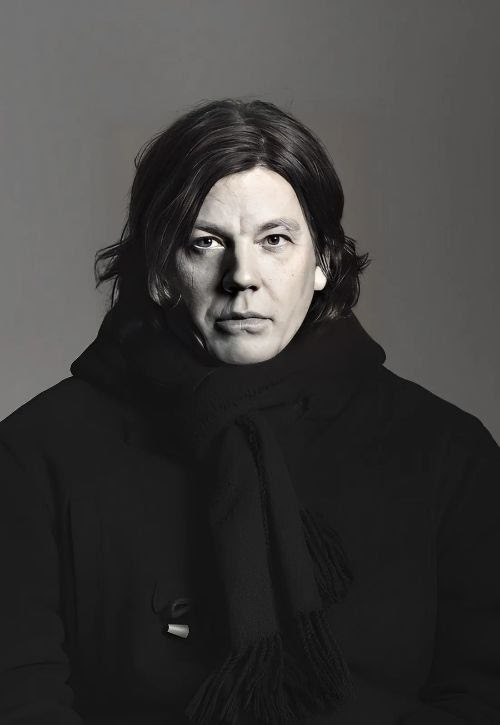
On what he half promises if the final album from The Black Watch, John Andrew Frederick wonders what cats dream about, pays homage to a Czech tennis player and borrows a quote from the classic film “Some Like It Hot” for its title. It’s all part of a worldview that has informed 27 albums of what can loosely be called indie rock but extends beyond that genre barrier, taking in elements of psychedelia, shoegaze and dream pop.
“I don’t believe it when people say, ‘Oh, I never go back and listen to my records,'” Frederick says in an interview to promote Black Watch LP No. 27, “The Fuzzy End of the Lollipop.” “I mean, I make records to have something that I can listen to that I like. I know that I’m going to like the influences of this band because it’s my band and they’re my influences.”
The sheer volume of material, even considering that the LA group’s first album was released in 1988, jumps out at you, but Frederick takes exception to my first question being about how he’s managed to release so much music.
“I think it’s probably sheer madness and bloody mindedness in tandem. I have a lot to say and I’m going to wax defensive if I carry on trying to explain the magic or the madness. I mean, it seems as though I might be an obsessive-compulsive person.”
He returns to the topic later in our conversation.
“I’m a bit irked sometimes when the first thing people say is like, ‘You’re so prolific.’ I hate the P word. Somehow I much prefer genius, of course. But that’s not necessarily only what we’re all about.”
Frederick is the only original member remaining in The Black Watch. His collaborators on “The Fuzzy End of the Lollipop” include producer and engineer Rob Campanella, formerly of The Brian Jonestown Massacre, who also plays bass at The Black Watch’s live shows; Scott Campbell, with the band off and on since 1991; and guitarist Andy Creighton, who joined in 2017.
Of Campanella, he says: “If you want to separate the notion of someone who’s married to rock or lives to rock, and the people who are amateurish and poser, he certainly falls into the former category of someone who lives and breathes music and knows so much music. I miss him when I’m not working with him.We have an adversarial relationship that’s healthy, I think. In the middle of making our last record, ‘Varied Superstitions,’ I said to him, ‘Rob, after working with you since 2015, can I win one argument? Just one?’ And he goes, ‘No, no, no, no.’ But then again, he often turns out to be right. God damn him.”
Another collaborator on the new album is Frederick’s son, Chandler Frederick, who plays bass and whom he credits for adding the choral sounds to the song “Sorrow’s Crown.”
“He came up with that touch to inject in there,” Frederick says of his son, whom he says has “voluminous” musical knowledge. “I thought, wow, that’s really beautiful. And it’s really different to what we’ve done in the past. One’s forever looking for ways to try to add different flavors to the curry, as it were. So, he came up with that and I thought that’s really, really terrific. I hope people don’t view it very cynically, like here they are trying to pull off a Spiritualized sort of deal, but it just seemed to fit the motif and mode of the song.”
“The Fuzzy End of the Lollipop” kicks off with “Marie Bouzkova,” named for but not about the 28-year-old tennis pro (currently ranked 28th in WTA singles).
“It started off being about this friend of mine named Mary who sort of fits that mold of the line about how she’s heartbreakingly beautiful inside and out but would never view it that way,” says Frederick, a tennis junkie who teaches the sport. “And I’ve met ‘Mary Bou,’ as she goes by on Instagram, I’ve met her a couple times at tournaments and just said hello. Nothing too terribly opprobrious or fanboyish. But I’ve watched her a lot. I have many favorite tennis players, but she’s really charming in interviews, so it’s not about her, it’s more about people. The most charming people that I find are ones that don’t care about or are blissfully unaware of their own pulchritude or their own charm somehow.”
The press release promoting the new album declares it as “maybe” the final one for The Black Watch. Why did Frederick feel the need to announce that “The Fuzzy End of the Lollipop” would be the group’s swan song if he’s not sure if that’s the case?
“Because I’ve been threatening to do it as a kind of a defense mechanism when people say, ‘You’re so prolific,'” he says, uttering the dreadful P word again. “Or this LA drummer, you know, nice guy, he’s been in a bunch of bands. One time, not too long ago, he said, ‘You guys have been around forever,’ and it just felt like a dig of going like, ‘You haven’t given up yet.’ I always say, if I dare say, cleverly, I didn’t start this band to become famous and rich, and I’ve succeeded admirably in becoming neither. Somehow, I do because I’m a true artist and I know it, and I’m unapologetic about that. So, there’s many things that I’m proud of, and I’m also proud of the fact that whatever laurels there are, because we’ve had heaps of great reviews, of course, very flattering, but you can’t eat your reviews, as they always say, but it doesn’t matter to me. I’ve tried to make each new record a reaction against the last one, and in fact, there’s a record that’s coming out after ‘The Fuzzy Lollipop,’ which is called ‘The Other End of the Lollipop’ that’s finished and we’re designing now, and I’m recording two songs with my son and with Andy Campanella and Rob Campanella. So, I’m an unreliable narrator. Don’t believe what I say unless it’s a sincere compliment.”



Leave a Reply