
It’s a common scenario for the avid concertgoer. Your plans have changed and you can’t make it to a show. You don’t want to be on the hook for the tickets, and you don’t want your seats to go to waste. Alternatively, you got shut out of tickets to see your favorite band and don’t want to pay through the nose on a secondary site to get in.
In either situation, one of your options is to deploy CashorTrade, the fan-to-fan, face value ticket reselling platform.
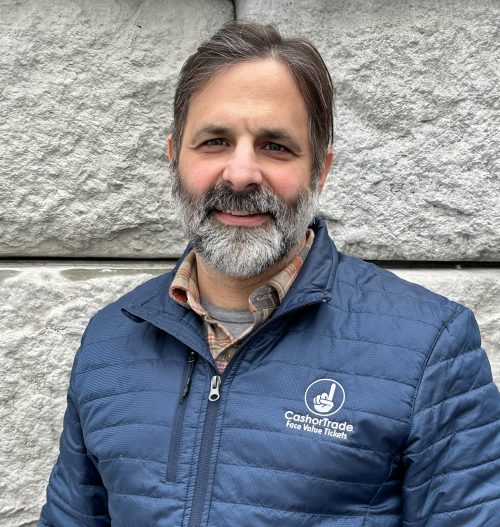
CashorTrade, whose logo is a single finger held aloft (recalling pre‑smartphone days of scouring venue parking lots for a “miracle”), was founded in 2009 by Brando and Dusty Rich, brothers who were bummed about the astronomical prices of secondary-market tickets to see Phish after the band returned from a hiatus. The Burlington, Vt., company now employs about 30 people and recently expanded its offerings by integrating with Ticketmaster as part of its “face value movement.”
Ticketmaster tickets listed on CashorTrade are authenticated using Ticketmaster’s verification technology, and the listings are capped at or below true face value. Sellers can choose who they sell to, and buyers receive a newly issued ticket from Ticketmaster in the CashorTrade app.
“When we first started, the industry didn’t believe the face value movement would work,” Brando Rich, the CEO, told Highway 81 Revisited. “And we stuck around trying to fight that fight for years and years and years, and no one ever really had interest. Artists would make a comment here or there, but it just didn’t amount to anything.”
He said the company went on to work with Billy Strings, Tyler Childers and Summer Camp Music Festival. “Not only did fans really want to participate in the service, but artists did too, and festivals and venues alike.”
Rich surmised that the rise of dynamic pricing on the primary market and talk of legislation regarding ticket prices meant “the primaries finally felt that they had an opportunity — or the artists felt they had the opportunity — to start obtaining market value rather than letting StubHub and Vivid and all the scalpers be the only ones who really get to leverage market value.”
StubHub and Vivid Seats did not respond to requests for comment.
Ticketmaster in April announced the integration with CashorTrade. This followed Ticketmaster’s 2019 launch of Face Value Exchange, which it continues to make available to artists who “want to set clear boundaries around resale pricing.”
The CashorTrade integration is available for select tours, with more to come, Ticketmaster said.
“Face value resale works best when it’s built on trust: trust that the ticket is real, and trust that the price reflects what the artist intended,” David Marcus, Ticketmaster’s EVP of global music, said via email. “That’s been the foundation of Ticketmaster’s Face Value Exchange since 2019, and it’s what CashorTrade has been building from the community side for even longer. This integration is a natural extension of that shared commitment, expanding the ways fans can buy and sell verified tickets at the price artists intended.”
Rich stressed that “partnership is not an acquisition.”
“I don’t know why people decided to use those words interchangeably, but words have meaning. And no, we didn’t sell to Ticketmaster or Ticketmaster did not buy CashorTrade. But we found ourselves engaging in great conversations around face value ticketing years ago, maybe 2023. And we were partnering with these artists, and the artists were playing a bunch of Ticketmaster venues, and I think there was communication with Ticketmaster about partnering with CashorTrade.”
He added: “I was on a Live Nation call and some Ticketmaster staff popped in and we got to meet each other, became friends and talk about the industry,” Rich said. “And I realized that it was really cool how focused they were on providing face value ticketing and how they wanted to support that.”
Brando says CashorTrade is open to working with other primary ticket sellers as well.
When fans are upset about ticket prices – which he notes are set by the artists’ team, not the ticketing company – primary sellers like Ticketmaster can receive the brunt of their frustration. Did that give Rich pause about a potential reputational hit to CashorTrade for partnering with the industry giant?
“Absolutely,” he said. “People have been frustrated by Ticketmaster. … There’s a lot that the average fan, including myself, did not know. And generally, ticketing sucks. There’s like five different organizations trying to run an event: the promoter, the venue owner, the ticket company, the artist, the merch industry. They’re all coming together, and they all need a slice of the revenue.
“Now, I never understood this or saw it, and I’m still trying to understand it, but what I’ve seen is primary ticket companies generally play the bad guy.”
Ticketmaster said it advocates for stronger anti-bot enforcement, banning speculative ticketing, all-in pricing, and common-sense caps on concert resale prices to better protect fans and artists.
“We believe artists should control how their tickets are priced, sold and resold, including tools to cap resale and protect fans,” Ticketmaster said.
Another layer of CashorTrade’s offerings is memberships. Benefits for gold users, who pay $48 a year or $6 per month, include the ability to submit a request to buy tickets immediately, forgoing the usual wait of 10 minutes after a listing has been active, and no 10 percent platform fee. Details on gold and free memberships can be found here. All purchases on CashorTrade, including those by gold members, incur a 3 percent card‑processing fee.

Leave a Reply