
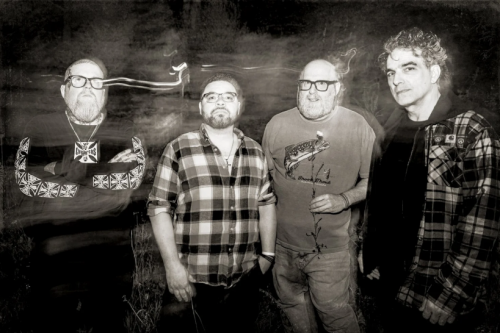
The surviving members of northeastern Pennsylvania hardcore band Side Over are certain of it: if their former bandmates were still alive, they wouldn’t be performing on Saturday. Or at all.
“No, no, no,” says Side Over guitarist Lou Rogai, asked if drummer Brian Craig, who died in 2019 after a battle with cancer, and bass player Neil Husvar, who died by suicide last year, would’ve been on board. “It had been talked about.”
“Brian didn’t want to do it again for some reason,” says founding singer Aaron Ferranti. “I don’t know why. And Neil was out in California, so I’d have had to convince Brian and then bring Neil in from California. And Lou was touring and doing his thing, and I was playing with other bands.”
The group, which Ferranti and Craig started in 1989, released demo cassettes in 1991 and 1993 and grew into a mainstay on the regional hardcore circuit before fizzling out around 1994 before their debut LP was completed.
The passing of Craig and Husvar precipitated the reconstituting of Side Over, which is now comprised of Ferranti, Rogai, who joined in 1993 and is on the second demo, James Simon on bass and Phil Layland on drums. They performed at last year’s Hardcover 4 Husvar benefit in Scranton, where they honored Husvar, Craig and another former member, Chris Pawloski, and will do it again on Saturday.
Last month, Side Over released “Loves You,” which features re-recorded versions of the early-‘90s demos plus a new song called “Scars.”
Ferranti and Rogai chatted with us about the bittersweet nature of their reunion and the legacy of the region’s hardcore scene.
Ferranti: The circumstances brought us together. To heal. And then it felt so good and right. For me, this was my baby. These are my people. This was my first band and my first love. I grew up with ‘70s rock, Grateful Dead. I got that whole background of ‘70s, ‘80, like everything, because my dad was huge into music. And then I started listening to like, Billy Idol was my first concert, you know? And then I started listening to Maiden and stuff like that and totally went the opposite and then got into hardcore through crossover, through like Metallica and stuff like that. And then you get MOD, SOD, and then you get right into hardcore. Then it was straight up like Circle Jerks, Agnostic Front, Black Flag, Sick of it All. We were just into the New York stuff and it was great. And that’s when we were like, “We’re doing this.” We’d be in the basement or the attic playing “For Whom the Bell Tolls.” We’re still in high school, you know.
How did it feel for you two to get back together with the new guys last year?
Rogai: Emotions. In some ways we picked up where we left off, right Aaron? Like we didn’t skip a beat. And in other ways, it was like I didn’t play music that heavy in a long time. Aaron has. So for me, it was kind of like “awaken the beast within.”
Ferranti: And something happened there, I think, and it’s awoken, and I love it, I love it.
Rogai: It’s good. And it’s a blend of some sadness because of the circumstances. A lot of joy because of the music and our camaraderie and with the guys we’re doing it with. James Simon, we recorded with Kevin Darcy, we have Phil Leyland playing drums now, it’s been really fun to connect with them. And Phil has a long history. He was a little kid at Side Over practices. He was inspired to play drums by Brian.
Ferranti: How about that? I never knew that, so it was kind of cool for me to be like, oh God, this was meant to happen here because Brian’s touch got into that kid’s head, you know what I mean? And it put him on a path and the path led to us, which is crazy.
So it was kind of neat for me to see that Brian touched this kid in a way where musically he evolved into what he’s doing now. It’s just great, you know? And when I hear him play, he plays like Brian plays. He plays with passion and he plays with feeling. And I could feel it, which is a good thing for me because it’s like my boy is back there still and he’s getting better and better as it goes, because Phil hasn’t been playing in a bit. So the more we play, the better it sounds. And it’s just charging me in my head to move forward.
Rogai: He’s charging us up to do better. And James on bass was really close with Brian towards the end of Brian’s life, the past decade of Brian’s life. And he knew Neil. He did not know Chris Pawloski, but we had a lot of different members in Side Over.
So there’s the sadness. There’s a lot of joy. There’s some anger circumstances, like suicide. It’s angering. It just drums up every possible emotion. So we’re processing all that and, we’re post- middle-age dudes. We have real-life things, but somehow Aaron’s lyrics from when he was 19, they apply in these situations in a totally different way than originally intended. And so as we’re writing new stuff and Aaron’s writing new lyrics, it’s like you take that experience, put it into what we’re doing now, try to pay a tribute to our guys and write about the present. So it’s really cool. It’s injected us with a lot of energy to do new things.
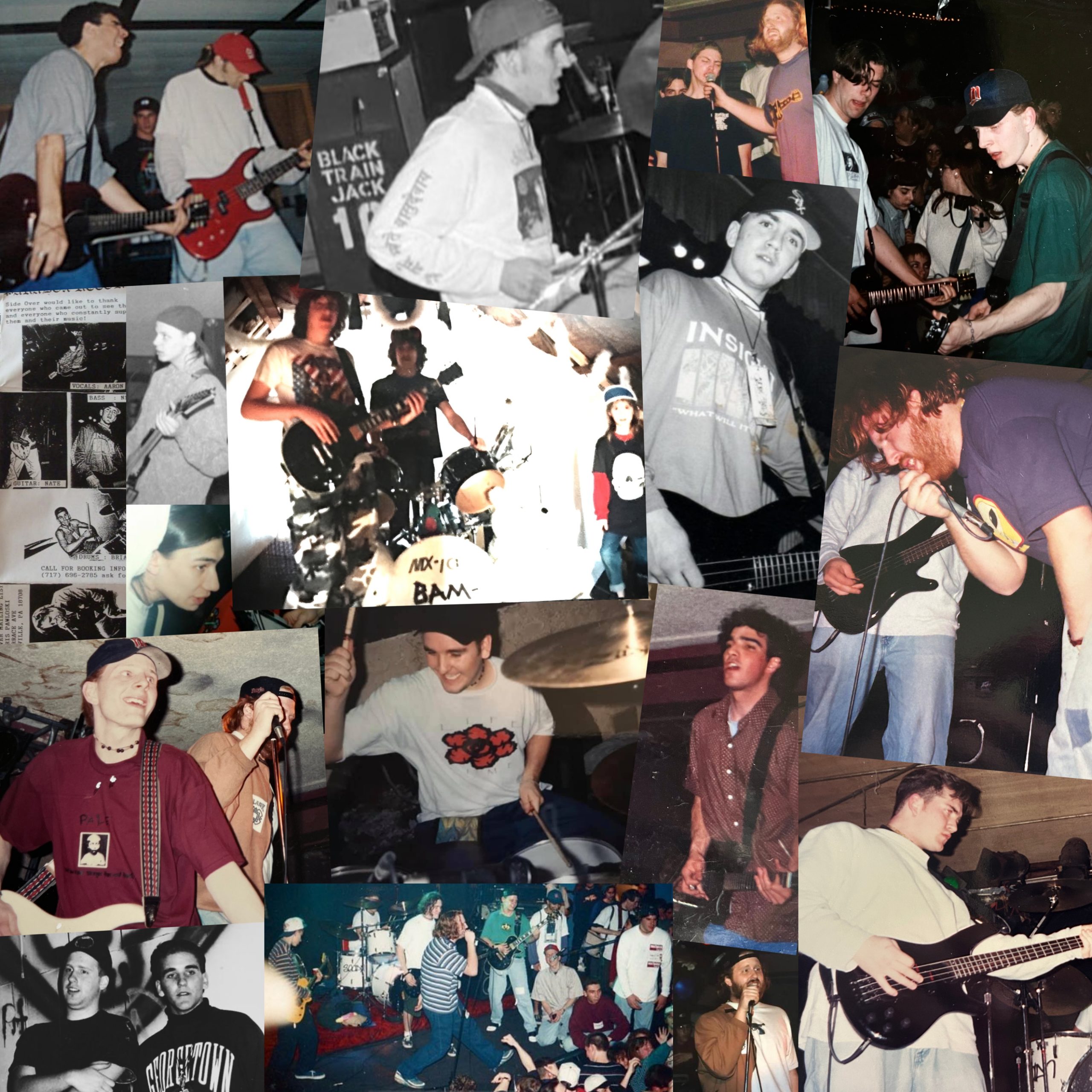
What is your sense of the legacy of Side Over and your peer bands from the ‘90s? Do you see it in the current artists?
Ferranti: I feel as though they’re doing everything now the same way we did it back when we were younger, and I think a lot of us laid the groundwork for what shows were. We were always friends with the guys from Wilkes-Barre. We always shared. And I feel like it’s the same thing going on now. The only thing I see in the scene that impacted me a little weird a little bit — and I haven’t left the scene, I’ve been in the scene — but playing in a band, and I don’t know how to say it, well, when you’re playing in a band, you’re on stage and you see some violence going on out there that shouldn’t be going on. That bummed me out about the scene. Like I see some weird violence against people in the scene. We’re supposed to take care of each other. We’re not supposed to single someone out and whack them with a fist or something.
But as far as the scene itself goes, it’s like when we were coming up in that, we didn’t know. We were just kids doing what we were supposed to do, getting together with friends. It was loose. There were no angles. There was no networking. It was just kind of really organic. Writing letters, meeting other bands, throwing shows in practice places, throwing shows at weird places. And I don’t know, there were really no older guys or older people doing it besides the guys and girls in Psycho Nurse and Weirdo Magnet, and they were more like punk and shock punk.
Rogai: That was number one, right Aaron?. Like it was about the friend groups first, not about advancing your band.
Ferranti: Yeah. Not that. That wasn’t even a thought. It was just having fun. I never even thought about advancing the band. Like we were just playing what we felt, you know what I mean? And it was different back then because now everything is so direct, like you go right online, boom, boom, look at me. Back then you had to write a letter or call somebody. You had to buy fanzines at a show so you could see where to buy records or where to talk to someone in another state that wants to have your band or wants to do an interview for their fanzine. So it was all networking and it was all human. It was face to face. Now everything gets construed through the internet, you know what I mean? So you’ll have Wilkes-Barre shows now. Yeah, they do a Wilkes-Barre show and then they’ll do a Scranton show or a punk rock, Scranton punk rock hardcore. But back in the day, it was both of us. It was all of us.
How have people reacted to Side Over playing some shows, like last year’s Hardcore For Husvar and the Gallery of Sound record store performance this summer? What has it been like to reconnect with some of the old heads and maybe meet some new folks?
Ferranti: It’s amazing. We have love everywhere. It’s great. Every show we’ve played so far, we’ve had love every time.
Rogai: Coming out of the woodwork. Like “I saw you guys at the Unisound in Reading, and I came to see you today, and I brought my kid.”
Ferranti: Or young bands we’re playing shows with and becoming friends with, and we have similar mutual friends, and it’s really cool. There’s a good camaraderie.
Hardcore 4 Husvar 2, featuring Judge, Burial Ground, Side Over, Human Animal, Controller, Rabid Shaft Badgers, Joystick Fury and Still Won’t Break. Saturday, July 25, 2026, 4 p.m. St. Mary’s Center, 320 Mifflin Ave, Scranton, PA 18503. $25 in advance, $30 at the door. More info here.

Leave a Reply