
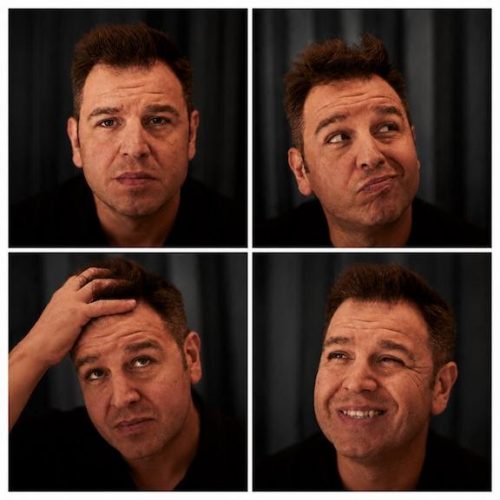
Eli “Paperboy” Reed’s journey has taken him from his hometown of Brookline, Mass., to Clarksdale to the south side of Chicago and back to the Boston area. At an early age, he won over hardened bluesmen who invited him to sing with them and brought his own songs to stages all over the world, from the Grand Ole Opry to Europe.
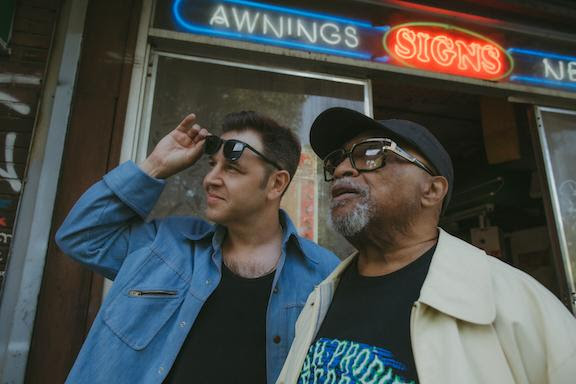
Now he’s released a new album called “Getting There” produced by the R&B and country iconoclast Swamp Dogg. The two have been friends since they first played a show together in Spain over 10 years ago. Swamp, who was an early mentor of Dr. Dre and World Class Wreckin’ Cru, hadn’t produced an album for another artist in more than 30 years, Reed says, as he has been focusing on his own music.
Reed, who will perform at Brooklyn Bowl on Sept. 25, recently chatted with me about making “Getting There” with Swamp Dogg, how family life influenced the record, his first performance at the Grand Ole Opry and why his second stint this Friday represents a step up, and why he thinks pop country’s bad rap isn’t deserved.
Swamp Dogg said about you: “I haven’t heard many white boys who can do what Eli does.” How did it make you feel to hear him say that?
Swamp and I have been friends for a long time, so it doesn’t surprise me when he says things like that, though I find it to be extremely complimentary and satisfying. I’ve been in a lot of situations over the years where I’ve have had people who I’ve respected and idolized really who have said extremely complimentary things about me and what I do, and I feel extraordinarily blessed to have been in situations like that, not only with Swamp, but Roscoe Robinson was a great mentor of mine. I spent a lot of time singing with Otis Clay and people like that. I think that my goal is always to make the music that I want to make, that I love, and if there are people whose music that I have been influenced by or that I’ve come up listening to who appreciate that and understand where I’m coming from and give me those sorts of accolades, you can’t really hope for much more as an artist, you know?
What inspired this set of songs? Where did they come from and how are they interconnected?
You kind of always mine a particular well of where your life at is at these days, and that’s sort of how this came about. I would say that the title song was probably the kind of guiding light in terms of the direction that I wanted the rest of the record to go. You can’t predict how everything is going to shake out. I have a big long list of song titles and as I go through and try to write, try to finish songs the way that they develop, it speaks to kind of my particular mental state at the time.
Tell me about “Like We Used To.”
It’s kind of like all of the songs on the record. It’s about life and family and marriage and being a grown- up. I think it’s about maintaining the relationship you’re in no matter how long it’s been and making a point to remind yourself of why you got into it in the first place.
What else do you like about the album?
I love this record. I’m very happy with all of it. Swamp and I, we have a duet on here with a song that I’ve had for a little while and I’ve always loved it, but I was like, this is not a song that I can do on my own. I played it for Swamp, and he’s like, we got to do this, we got to do this as a duet, and I was like, OK, let’s do it. And then we do this version of “How Can I Forget,” which is the only cover on the album, a Jimmy Holiday song. And there’s acoustic guitar on almost every song on this, I played more keyboards on this album than I played on any album before. Swamp played pretty much all the acoustic piano, but all the electric piano, Wurlitzer and organ I played myself. So there’s a lot of firsts on this. It was extremely, extremely satisfying to make.
You’ll be playing at the Grand Ole Opry on September 18. What was your first time like in 2022?
I mean, fairly epic. I’ve been a country music fan since I was a very little kid. We had country music in my house all the way growing up and modern country. We listened to country radio in my house. I went to Nashville with my dad when I was 10 and went to the Grand Ole Opry, and that has to be [where] the idea of being able to go and sing at the Opry and also to do it on my own terms in a way that I was doing [came from].
I had made this album with Merle Haggard songs so that was kind of my inroad there, but people appreciated it for what it was. I wasn’t trying to do something different than what I do. I’m quite excited to go back and sing my own original songs. I think that is kind of the next step up.
You’ve talked about your love for ’90s country. Who are some of the artists from that era that you like?
I grew up with Alan Jackson and Randy Travis and Clint Black and Martina McBride, like everything that was on the radio. Swamp and I actually really bonded over that. I mean, his song “She’s All I Got” was the hit for Johnny Paycheck then also a hit again in the ’90s for [Tracy Byrd]. I think that my songwriting and my approach to song construction is very informed by that particular era of country music. I mean, I think it’s some of the best songwriting of any era of country.
How do you feel about the current “bro country” debate?
Well, I really like the Ella Langley record. That’s like everywhere right now. “Choosin’ Texas,” it’s a great song. It’s a great country lyric, great country record. People who like to talk shit about modern country music, and by modern, I mean like the past 30 years, [say] well, what about the production? and it’s so cheesy and this and that. It’s like, I don’t really care all that much about the production. I care about the song and the singer, and I think if it’s a good song and a good singer, production could be cheesy. Shania Twain records sound like they’re hair metal, but the songs are great. So I think it’s important to be able to separate that. I’m not a purist when it comes to production. I am when it comes to soul music, but I think country music, you got to kind of meet it where it lives. As far as the current state of country music, I think I’ve always said that at the baseline of country music on the radio or popular country music, whatever you want to call it, there’s at least one out of every 10, maybe 15 songs that’s great, and that’s a pretty high percentage if you get right down to it. Maybe you’ll hear two or three a day if you listen to the radio all day and you’re like, oh, that’s a really good song.

Leave a Reply