
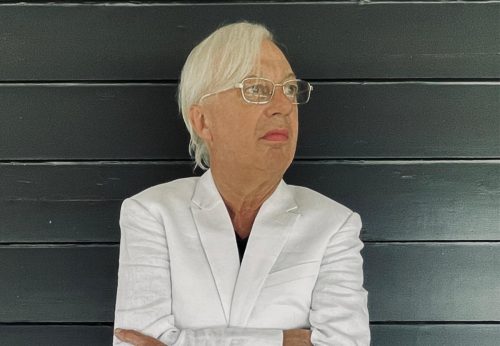
He’s dragged Iggy Pop out of bars, seen the Frida Kahlo painting in Madonna’s home and learned firsthand from Ric Ocasek how The Cars tracked their pristine vocal harmonies.
Roger Greenawalt, 65, moved through the music industry first as a member of The Dark, then as a session guitarist and in-demand producer. A lifetime spent mostly serving other artists’ vision has informed his first solo album, “You Are My Star.”
“I’ve always been a Cyrano, behind the scenes advising people, supervising the transaction of the money to the recording studios, all of that,” he says. “I’d often be in the position where I’m recording young artists and providing adult supervision. They’re not really going to give a big pile of money to a teenager. There’s got to be a grownup in the room.
“I’ve been doing all these songs forever and I always play solo gigs. Now is just the time. I ain’t done losing yet, it’s just too late to give up. You get to 65 and people start to drop like flies.”
The album was produced by Ben Kweller, the indie singer, songwriter and guitarist who Greenawalt guided through his early career, including a bidding war for his services from the likes of Jimmy Iovine with Interscope and Madonna’s Maverick Records, after he discovered him when he was just 14. In the press notes for Greenawalt’s new record, Kweller says: “This guy has taught me so much of what I know, and here he is coming to me like Mr. Miyagi coming to Daniel-san for help.”
Greenawalt says working with Kweller again “was delightful, because I’m just lazy. I was so thrilled to be sitting in the back of the room on the couch, besides when it was time to play instead of being nervous and anxious doing performance, which is what producing and engineering is, because you’re holding the energy in your hand. You’re like a pilot in an airplane. You can’t show lack of confidence of the plane is gonna crash.”
Greenawalt has been living in Bangkok but is in the US for finger surgery due to a condition called Dupuytren contracture. In Thailand, he has been working with artists like Aey Kuljira and Topsie.
The ukulele-playing musical savant chatted with us about “You Are My Star,” which he calls “a compendium of my life’s work,” rubbing shoulders with the industry’s upper crust and running Shabby Road, his old studio in Williamsburg, where he regretfully turned down the opportunity to work with a young Lana Del Rey.
There’s such a whimsical outlook in your lyrics. I’m reminded of writers like Dr. Seuss and Shel Silverstein.
Thank you very much. I really adore Dr. Seuss, I really adore free association with early childhood things: I miss my blankie, have you seen it? It’s gray and I lost it 60 years ago. I think my mother threw it away.
How did you get into playing ukulele?
Oh man, because basses and guitars, they’re actually heavy if you’re a small-framed person like me. I’m 5-10, 5-11-ish and about 150 pounds, so I had a hard time carrying these things around. The ukulele is like an iPod with strings that you can play live and walk and play it, stroll and play it. The crucial thing is to carry it on your back without a case, just in case you need it to be spontaneous.
How did you transition from a guy playing in bands to becoming a producer?
The switch was around [age] 27. What happened was I was lucky to have really good mentors. So I got to record with Ric Ocasek when I was 19 and work as a tea boy in the Cars’ studio and see good recording.
The recording studio was always there but my passion was to be the Jimmy Page to somebody’s Robert Plant, to be the Pete Townshend to somebody else’s Roger Daltrey, the Keith to the Mick. I literally just learned all the skills to protect myself from bad producers and bad engineers. It wasn’t like an original idea. But the studio is magic.
What did you learn from Ric?
Attention to group backing vocals. I learned how The Cars did their backing vocals. They’d sometimes take a whole 24-track tape, it had a mix on channels one and two and fill up the rest of the tracks with backing vocals, and it would be like four of the cats from the band around a mic singing unison notes and tracking them, everybody singing the harmony, four people on one note. They had a nice blend vocally.
I read the New Yorker story from 1997 about the courting of Ben and all the A-listers that were around you and him at that time. What was that like?
It was really fantastic. First of all, I get to feel like I belong here, I can hang. And Ben has just the idiotic confidence of absolute youth, so he was confident even though he was pretending, and it read very well. He just made such a good impression. And I really just liked observing the lives of these famous people. People were really in awe of Axl Rose. I was sitting with Dr Dre, Rick Rubin, Tom Petty and Joe Strummer, which is how I ended up working with him. Joe Plays “London Calling,” Tom Petty plays this Beck song called “Asshole” that I had never heard before. Then he made up a song about Jimmy Iovine’s big green lawn because that’s whose house we were sitting in. Then they tossed the guitar to Ben, and Ben Killed. He did one of his songs and he killed with all these people there. And I just thought “this kid is gonna make it. My work is done here.”
What else stands out in your memory from that time?
The smartest person I met in the music business I think is Madonna. Super intelligent, super high emotional intelligence. I was kind of quiet and she understood that I was the most experienced person on that team and that’s who needed to be convinced. She showed me her Frida Kahlo [painting]. People have this stuff in their houses, it’s incredible.
You worked with Iggy Pop, right?
I babysat him once when he was in his hedonistic days and I was the guitar player in the Cars’ studio. Ric connected with Iggy, so Ric’s producing Iggy, great. We do two songs and they have been released somewhere, they’re on Spotify.
Jim [Iggy’s real name is James Newell Osterberg] is an extremely well-read cat but was also a total libertine at the time. I would have to find him across the street at Frankenstein’s bar. He’s sort of get there at 11:30 or 12 and just drink beers and hold court. He was a complete world-class raconteur, really funny.
One time he came up to me and said, “you got any pot?” I said “not on me, I have it at my home.” I had the most posh, proper English South African girlfriend, a painter. Very refined and cultured. I brought Jim over and flirted with her the whole time and ate every bit of food we had and smoked every bit of my pot. It freaked Lisa out. She said don’t bring that guy over here again.
Tell me about your time at Shabby Road in Brooklyn.
I’ve always had a recording studio. For the last 30 years I built all these studios and moved one. Shabby Road was at North First and Kent Ave right on the river. It was during like the electro-grunge thing. Avenue D, they were like an obscene girl hip-hop group. Larry Tee was a big guy in that scene and I used to record a lot of this music. I think he moved to Berlin.
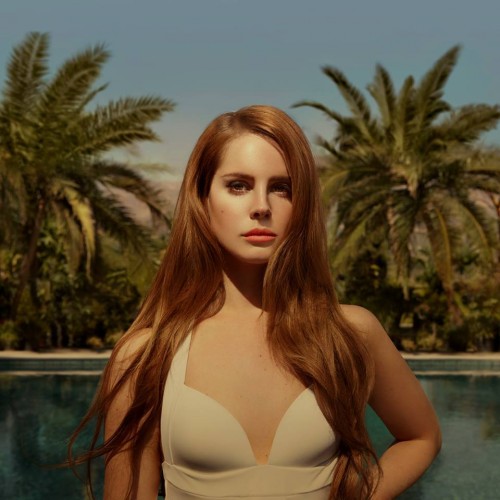
The one that got away was Lana Del Rey. I had produced The Pierces at Shabby Road and she was a fan of them. She was Lizzy Grant then. She came to see me and talk about producing. I think I got the sense that she didn’t have any money and I’d just have to do it for free or something. I don’t know why I didn’t do it. And I’m a huge Lana fan. And The Pierces have since become friends with her and she’s written to me fanboy things that made me gush. She’s a really nice girl.

Leave a Reply