
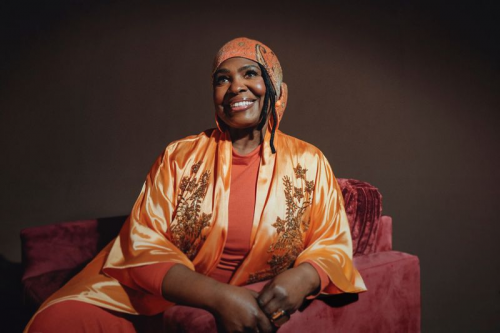
Ruthie Foster played in the US Navy band, sang with the Allman Brothers and has performed at the top blues festivals in the country. She was born and raised in Texas, lived in New York City and moved back to the Lone Star State. She stepped away from music to care for her mother, then returned to win her first Grammy, 15 years after her first nomination — the first trophy in Sun Records’ 74-year history.
Foster recently released a new LP, “Just Say Yes,” her first since 2024’s “Mileage” took home the Grammy for Best Contemporary Blues Album. She again worked with the married-couple production team of Tyler Bryant of The Shakedown and Rebecca Lovell of Larkin Poe.
With a new album to promote and a tour about to start that will take her to Café Wha? on Oct. 5, I reached Foster at her home in Austin to chat. Here are some highlights of our conversation.
What does “Just Say Yes” mean to you?
“Just Say Yes” to me right now means saying yes to myself, to my peace, to my time, having time with my family. It started out as a mantra for me to get back into music because I’ve taken a few breaks from music to do other things, take care of life, take care of my mother. Really just to have something to write about, have something to say. Now it’s come to this place where I’ve lived a pretty eclectic life, and hopefully that continues.
But right now it’s about saying yes to things that matter to me, and I think this album really says a lot about that, from knowing when to take advantage of being still, because I had an injury that forced me to be still, and so there’s a song about that. And taking time to be with my family, because this particular lifestyle, being on the road, it can be strenuous. It can test your patience. Being on the road is very physical. You’re lifting equipment and suitcases in and out of cars, and it wore on me. I’m in my 60s now, early 60s, and it’s starting to show, I’ve been doing this since I was a kid. Music. So this album says a lot about that, about the process it takes to do what I do. It says a lot about what I’ve learned about myself and not necessarily where I want to go, but where I’ve been and where I don’t want to go again.
Tell me about the atmosphere around making the record with Tyler and Rebecca.
We recorded at their home. They have a studio on their property, and that was different because the first album, “Mileage,” that we did together was in their house in the basement, and I felt guilty because we were down there pretty late when Rebecca’s trying to sleep because she has tours. But this one, we got together during AmericanaFest, which happens in September of the year, and I recorded two songs that they had started and then I finished at that time, and then I went back in December, basically moved to Nashville for a couple of weeks. And we did the writing process there in their house with their little guy Jesse crawling. He’s walking now, just to give a sense of time. And we just sat around and they let me talk about my life and they were really great about just putting my life into words and into a lyrical form, and then I can basically go from there and just add on to it. It’s like having my own ChatGPT.
What did it feel like to win a Grammy 15 years after you were first nominated?
Oh, I relive that often. It’s such a beautiful thing. It takes me back to being that 13-year-old sitting in my living room, fighting over the TV to make sure that we got the Grammys to watch on TV. My brother even called me, and he says, “Hey, sis, you did it. Remember we used to fight over the TV and when you wanted to watch the Grammys?” That’s where it takes me. That’s what it felt like. It took me back to sitting in the living room in the ‘70s and watching people like Janis Ian, when she won the Grammy for best song, and Roberta Flack, it took me to that.
It’s a beautiful feeling to be validated in that way. Because we are in this association where we all vote for each other. There’s no committee or team or anything. We’re voting for each other. And to be in the mix with a lot of my friends who were in this category, Best Blues Contemporary, that was great, and to hear from everybody. I heard from Shemekia [Copeland], she was up for the Grammy that year too. I heard from Joe Bonamassa. I heard from everybody and it was really great. You know, it’s not really a competition. We’re just out here putting our music out. We’re putting our best out there and then we vote on each other. So it’s really, really validating.
You were also the first Sun artist to win. It wasn’t Elvis or Johnny Cash.
Well, yeah, you just put it there. I don’t even know. I hadn’t even thought about that. Wow. Right. We got Elvis Presley, Carl Perkins, Johnny Cash, Jerry Lee Lewis and the list goes on. It’s incredible. Yeah. That happened, that happened.
You’ve been a part of some great collaborations, like singing with the Allman Brothers at the Beacon, just to name one. Are there any that stand out to you, or interactions you’ve had with some of these folks over the years that are special to you?
They all are. I run into Warren Haynes all the time. So in fact, he had a kid shortly after I had a kid, and we talk about that. That’s the thing we do when we see each other, we whip out pictures of our babies that aren’t babies anymore. That’s the connection you have after being with somebody and sleeping on the bus and those bunks for months at a time. It all means a lot to me. Running into my buddies Susan Tedeschi and Derek Trucks. Whenever they’re in town here in Austin, I try to get some tickets and get backstage and get my hug and catch up, and all of it means a lot. Again, validating, knowing that we’ve come through this together all these years. I still remember going to see Susan when she didn’t know me and I didn’t know her, and before she even met Derek. And I’ve been a fan of both of them for many, many years. It’s so cool to run into each other and just be the moms and the aunties that we are. We talk about real life when we’re together. We don’t talk about music much. Derek, I do talk a lot about music with, though. He and I have that same, I don’t know, that same brain stem when it comes to being together. We end up talking about people like Sister Rosetta Tharpe and we talk about gospel music, because if you listen to the way he plays, he plays like someone would sing, right? He plays like a vocalist. And I think that’s my connection with Derek for sure.

Leave a Reply