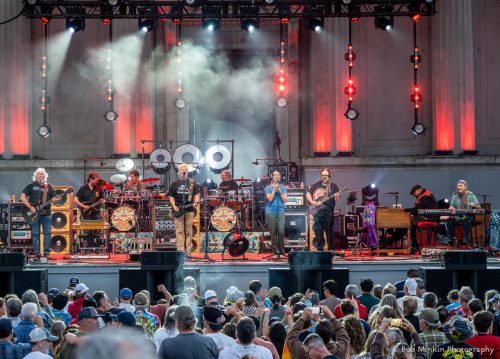
Starting just two years after the death of Jerry Garcia 29 years ago, Dark Star Orchestra has blazed a trail as the precision Grateful Dead tribute, painstakingly recreating the legendary Bay Area band’s shifting setlists in addition to its “original” shows consisting of a la carte Dead tunes and some other fun songs.
DSO is capping a banner 2026, which included a two-night event at Berkley’s Greek Theater dubbed The Music Never Stops: A Rex Foundation Benefit & Tribute to Bob Weir and its annual Dark Star Jubilee festival in Ohio.
At the benefit for Rex, a charity founded in 1983 by Dead family and fans, DSO was joined by Weir’s former bandmates in Ratdog and members of the extended Dead universe, like Jerry Garcia Band organist Melvin Seals and audio engineer Betty Cantor-Jackson, whose namesake “Betty Boards” were the gold standard for live Dead tapes.
Ahead of DSO’s two-night run at The Wellmont Theater in Montclair on Thursday and Friday, DSO keyboardist Rob Barraco checked in to talk about the band’s outlook after the deaths of Weir and Dead bassist Phil Lesh, how younger musicians and fans are keeping the flame burning and why Garcia’s late lyrical partner Robert Hunter deserves to be held in the same esteem as Bob Dylan, Joni Mitchell and Neil Young.
Has DSO’s mission changed since Phil Lesh and Bob Weir died?
I mean, we’ve always been of a mind to just carry on the tradition, and I think from Bob and from Phil, one of the lessons that I carry through my life is to expect the unexpected and to always, always push the envelope.
Dark Star’s Bob Weir tribute show at the Greek looked amazing. What was it like to be with Bob’s former bandmates and so many folks from the old Dead scene?
We were blessed with these two incredible days weather wise, and it became a huge reunion for the Grateful Dead family. I didn’t even expect it, but all the Grateful Dead road crew and Betty Cantor-Jackson was there and the Grateful Dead’s front of house engineer Dan Healy and all of these people. I mean, Sam Grisman was there and then you had Trixie Garcia, and it was just a joy fest. And musically, the first night we did a tribute to Bob Weir and we had a bunch of Bob’s former band mates come out and play, and that was tremendous, and the second night we recreated a show from Roosevelt Stadium from 1973. I mean, it was just a magical evening.
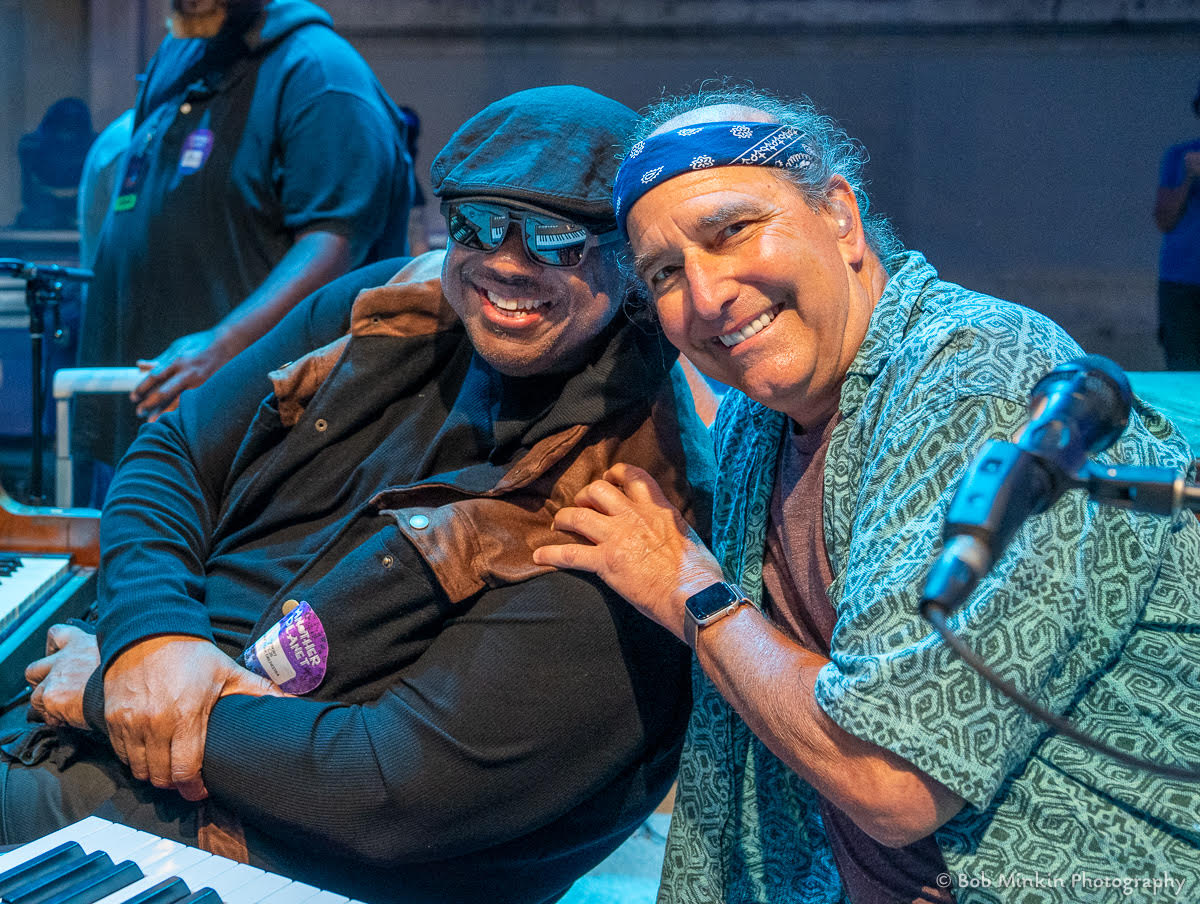
After the Montclair shows, you’ll be doing another Rex benefit in DC where you’re going to play the Dead’s live acoustic album “Reckoning” for its 45th anniversary. Is that an opportunity to shine a light on a different side of the Dead?
Absolutely. You know, I wish I was a Deadhead in 1970 and was able to get to see them do those shows where they would do a whole acoustic set in the middle, you know? So “Reckoning” was kind of like a little bit of a tribute to that in a way.
Before you were with DSO, I saw you play a bunch of shows with Phil Lesh & Friends, so it was cool to see you play with Grahame Lesh & Friends at the Hudson River Music Festival in 2025. I assume you’ve known Grahame since he was a little guy?
I do. I know him and his brother since they were little kids, they kind of grew up with my kids. Very similar ages. And you know, I’m really proud of Grahame. He’s grown as a musician and as a person, and he’s really carrying that spirit right now.
Do you think he picked up on his dad’s knack for putting bands together and leading them?
Oh, it’s in his genes, man. And he’s a hell of a bass player. I mean, he’s a good guitar player, man. But his bass playing, that’s where he shines the most to me. He reminds me of his dad.
I’ve seen DSO at the Rooftop at Pier 17 on the seaport in Manhattan the past two summers, and it looks to me like your crowd is getting younger. Am I seeing things?
We are definitely attracting a younger audience. I think Dead and Company did a wonderful thing for the community. It brought in a whole fresh new group of folks, and they are hungry for this. They’re hungry for the community. They’re hungry for the music and the experience.
I can’t name a Rolling Stones tribute band but I can name three or four very good Grateful Dead ones. Why do you think the Dead’s music has inspired bands like DSO and JRAD, and why is there a market for them to play bigger venues as well?
First of all, let’s talk about the body of music. The thing that attracted me to music in the first place was the Beatles because of the strong melodies and the craftsmanship in the songwriting. Grateful Dead, you know, they hold their own against any of the great songwriters, especially lyrically, Robert Hunter. I mean, what can you say? I think that’s a really important aspect of why so many people are attracted to this music: the stories. And yeah, that’s what I got to say about that.
Do you think the fact that the Dead stretched these songs out and have this reputation as jammers has kept Hunter from being seen in the same light as someone like Dylan?
I don’t understand it. Could it be that just hippie culture itself is looked a little down upon? It’s so funny, because when you’re in that culture, you never look at it that way. But I I’ve heard disparaging things said about, you know, even the Grateful Dead as musicians and stuff, which is ridiculous, right? Those guys were great musicians and they were amazing songwriters. And Hunter. Hunter should should be celebrated like Bob Dylan and Joni Mitchell and Neil Young and all those great songwriters. No one writes lyrics like that. He was the bard, man. I’m sorry.
And Dylan tapped him to cowrite a few times.
Absolutely. Dylan knew it. Dylan knew it.
Photos by Bob Minkin


Leave a Reply