
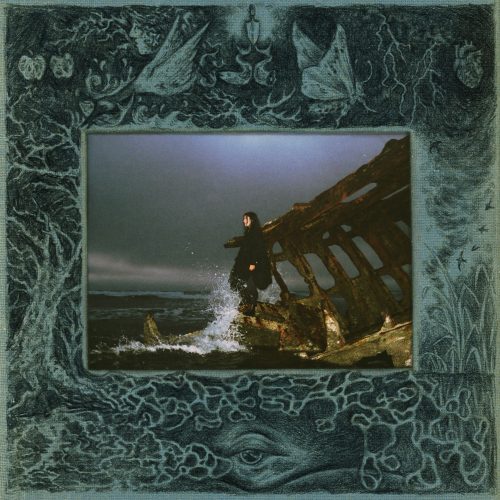
“Death in the Business of Whaling,” the second album from Searows, is a work of emotional, lyrical and musical depth that deploys seafaring imagery to trawl for broader truths.
Portland, Oregon’s Alec Duckart borrows from a literary tradition of fishing and hunting tales as metaphor for internal quests. With a voice eerily similar to Phoebe Bridgers but instrumentation more directly rooted in the neo-folk realm, he sings of marine animals and wolves but the themes he explores are decidedly human.
The opener, “Belly of the Whale,” has lush layers of guitar and banjo, evoking the rustic melancholy of artists like Great Lake Swimmers. On “Kill What You Eat,” he talks of gutting fish for the family and running away from the song’s target rather than falling through the ice.
On “Dearly Missed,” musically heavier with crashing drums and electric guitars, Duckart compares himself to a bird and his listener to a cat. “He drove his car off of the river bridge/
They never found him, and they haven’t since/ He’s dearly missed.”
On “Hunter” and “Junie” he builds on a simple and repetitive structure of guitar chords, à la Ethel Cain, with only slight tonal variation on the choruses. On the latter, he tells a partner he’s no good for them, deciding to move to the seaside with his grandma: “I made this mess/ From a distance/ It’s gonna take me next.”
By the time we get to the penultimate “In Violet,” a sense of repetition has set in thanks to similar tones and scales since our journey began; maybe that’s an intentional move to get across the album’s unified theme, which is summed up in the finale, “Geese”:
“You do not have to be anything better/
But, my darlin’, you cannot live like this forever/
Like wild geese flying toward something/
You do not have to do good/
But you cannot do nothing.”
Searows will perform at an in-store at Rough Trade in New York on Jan. 23 and at Webster Hall on May 6


Leave a Reply